
What to bring on your first overnight hike depends a lot on where you are hiking, what the weather will be like and what the walking conditions are like. This is not a definitive list — it is a practical guide based on real experience, mistakes included. Most of these mistakes were made on a 3 day 2 night hike around Mount Kosciuszko, which is a great first overnight hike for Australians and one I would recommend highly.
Footwear
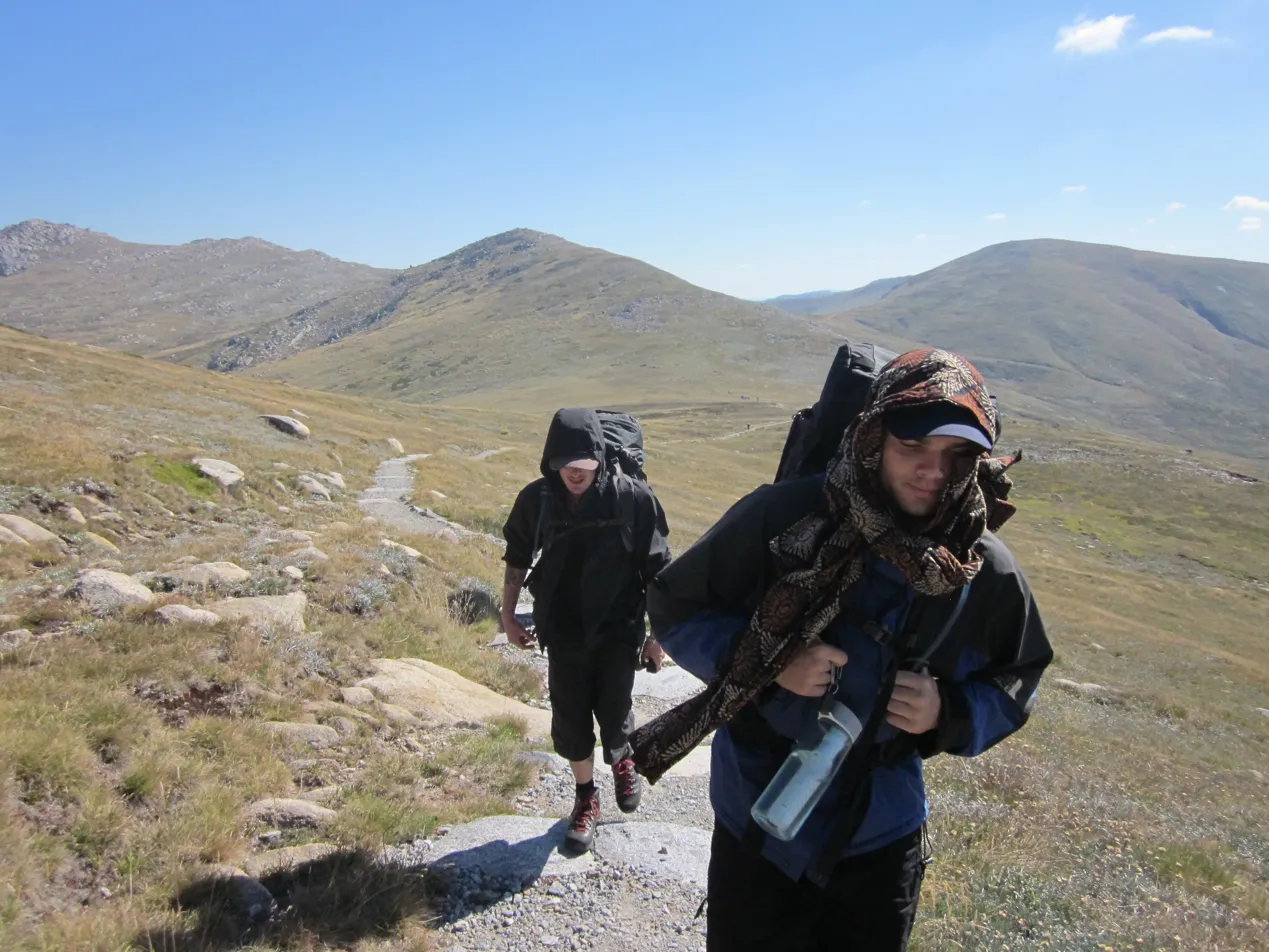
If the walking is easy and relatively flat, trail runners or a lightweight Gore-Tex shoe might suit you better than a full boot. Salomon are a popular choice and the XT6 is a great option — they are also better in warmer weather as they allow your feet to breathe. That said, if you are on a budget and only want to invest in one pair of hiking shoes, opt for a boot. A Gore-Tex mid boot like the La Sportiva TX5 Evo is extremely versatile, keeps your feet dry and handles most terrain well. You can often find quality hiking boots secondhand on SummitSwap for a fraction of the retail price.
Pack
Your bag is supporting everything, so fit matters more than brand. Most top end brands will serve you well as long as the bag is sized correctly for your torso. Hiking packs can be very expensive new — buying secondhand saves a lot. If you are not sure what size you need, most brands have sizing guides, or you can go in store, try one on, and then buy it secondhand. My pack is an Osprey Aether and it comes with a waterproof rain cover included, which most quality bags do.
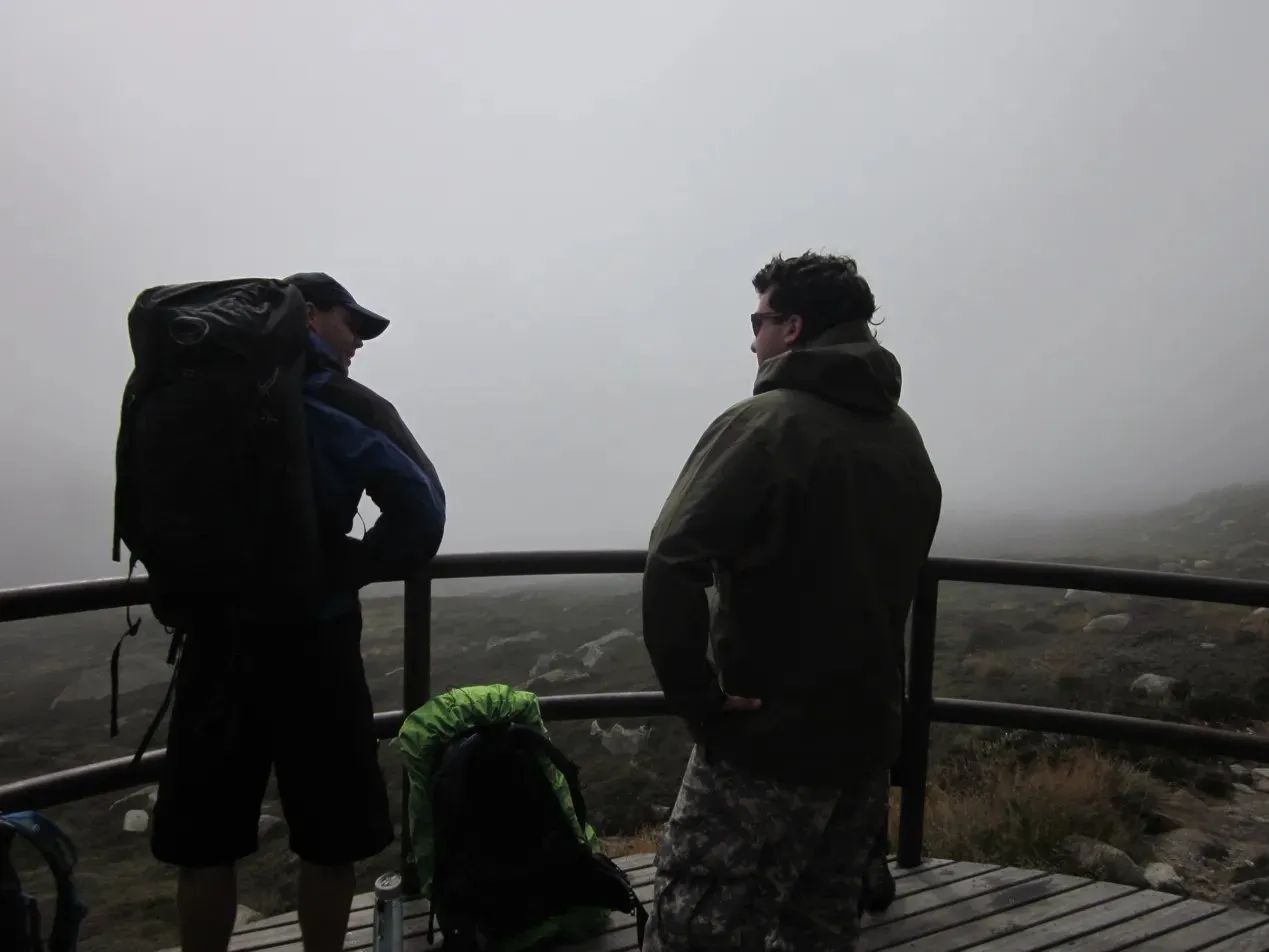
Osprey Kestrel and a Black's bag picked up from the op shop for $10 — waterproof cover on because of the mist
Sleeping Mat
On my first hike I cheaped out on a sleeping mat from Kathmandu that was more suited to car camping. It weighed around 900 grams which is heavy by any standard, but the bigger issue was its packed size — I had to strap it to the outside of my bag. This is rarely a good idea. Even with a waterproof cover, anything strapped to the outside risks getting wet or damp and a damp sleeping mat will significantly affect your sleep and can develop mould over time.
If you want something cheap and robust, a Macpac Thermfold or any generic foam mat from a hiking store will do the job. The honest caveat is that if you roll off it in the night you will barely notice the difference from sleeping on the ground — they are not comfortable, but they are functional and pack down small.
After some research I landed on the Sea to Summit Etherlight XR as my mat of choice, but many brands will serve you just as well. A good mat is worth the investment if you plan to hike regularly — top end mats pack down very small and provide a genuinely comfortable night. Pay attention to two things when choosing: size and R value. Size guides are available online for every brand so you can make sure the mat is long enough for you. R value determines how effective the insulation is. In cold conditions a low R value mat will let cold seep up through the ground and leave you cold regardless of how good your sleeping bag is. My mat is rated 4.1 which is useable in just about any climate you are likely to encounter in Australia.
Check SummitSwap for secondhand sleeping mats — people upgrade often and a quality mat at half price is very achievable.
Sleeping Bag
Think about what kind of hiking you are likely to do most. If you plan to hike year round through summer and winter you will probably end up needing more than one bag. If you are only planning summer hikes, you can get away with something on the cheaper end since warmth to weight ratio matters less when it is warm. A winter specific sleeping bag can take up significant space if it is a low end or non hiking specific version, so pay attention to pack down size and warmth to weight ratio. Down runs warmer and lighter than synthetic alternatives but is priced accordingly.
Pay attention to temperature ratings when choosing. Most bags list both a comfort rating and a limit rating. The limit is not where you want to be — if a bag is rated 5 degrees comfort and 0 degrees limit, it means you are unlikely to be in danger at 0 degrees but you will not be warm or comfortable either. Treat the comfort rating as the lowest temperature you should realistically be using the bag in.
Tent
Your tent choice comes down to weight, space and budget. I use the Naturehike Cloud Mongar 2, a two person nylon tent widely regarded as one of the best budget options on the market and regularly compared to tents at three times the price. The Mongar 2 is the most spacious tent in the Naturehike range and weighs 2.1kg, light enough to carry solo even though it sleeps two. If you are mostly hiking solo, the single person version makes sense, but the two person gives you more room to move and store gear inside.
There are plenty of directions you can go with tents. Some ultralight options ditch poles entirely and use trekking poles to prop them up, saving significant weight if you are already carrying poles. Different setups suit different conditions and different people.
If you are just getting started, look for a quality secondhand tent first — people upgrade tents regularly and you can find excellent gear at a fraction of the price. If you cannot find one secondhand and you are on a budget, Naturehike is genuinely hard to beat for the money.
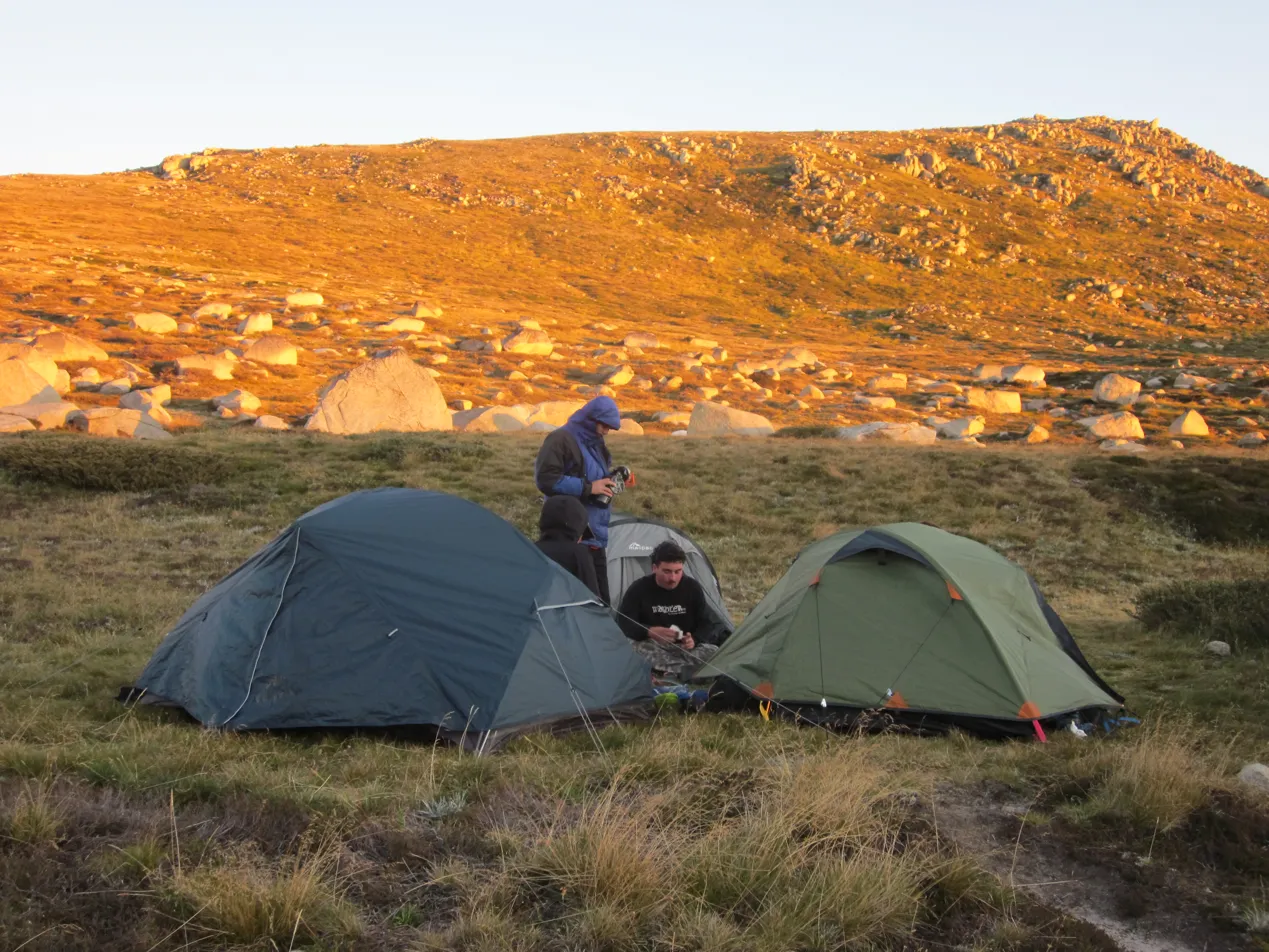
Naturehike, Spartan and Macpac tents set up at golden hour in the Kosciuszko alpine zone
Pillow
Possibly the most underrated piece of gear. I went with a Nemo Fillo and it has been by far the most comfortable hiking pillow I have tried. My co-founder Oscar has been caught trying to swap his for mine on more than one occasion. What makes it work is the combination of foam and inflation — purely inflatable pillows do not have enough give, and pure foam pillows can sink through the night and are heavier. If you want to go ultralight an inflatable only pillow works, but in my experience the difference in pack size and weight is small compared to the difference in comfort.
Cookware
This depends on how you want to eat. If you are going ultralight and are happy with dehydrated meals cooked in the bag, a Jetboil is the move. It is the most gas efficient option, boils water fast, and that is really all you need for bag meals, instant oats, coffee and tea. Simple and effective.
If you want more cooking flexibility, a trangia works well but adds weight and parts. My setup is a simple screw-in burner from Anaconda for $15 that screws directly onto a gas canister, paired with a stainless steel pot that doubles as my bowl. Stainless steel is solid, does not leach anything into your food and is reasonably light. Titanium is lighter and more premium but priced accordingly.
A spork covers two utensils in one. A Swiss Army knife eliminates a few more. These small items add up quickly on a longer trip so think carefully about what you actually need.
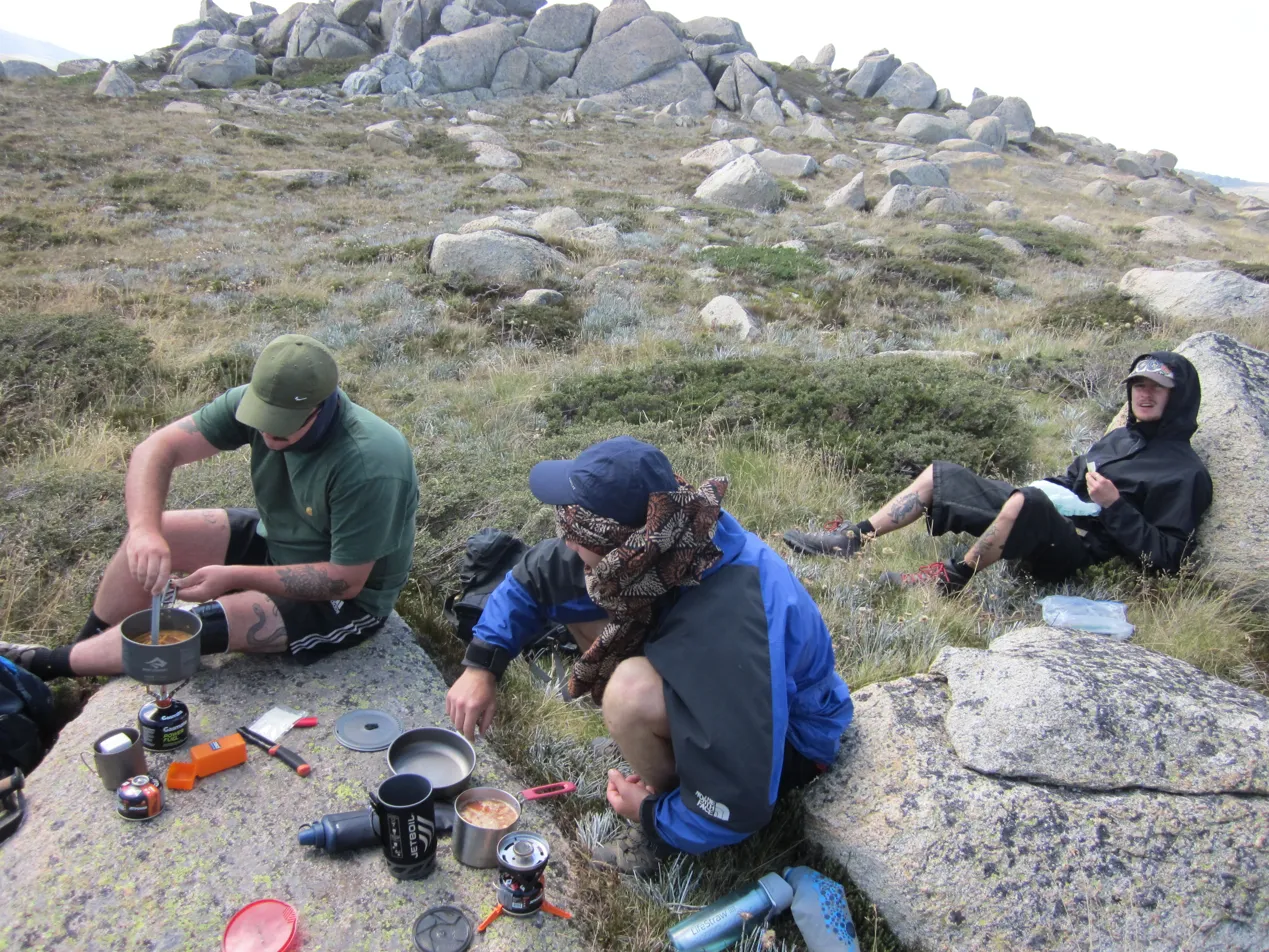
Making lunch with a Jetboil and a $30 Furno stove
Head Torch
Essential. Our group has a strict red light policy around camp — white light blinds people and ruins the atmosphere. Red light only once you are at camp cooking or sitting around. If your torch is rechargeable, check how long the charge lasts on lower settings. A decent one will run 40 hours or more on low which is plenty. If it is battery powered, bring a couple of spares.
Socks
You will not find these on SummitSwap for obvious reasons, but investing in a good pair makes a real difference to your walking experience. Merino blends are the best choice — comfortable, warm and naturally odour resistant, which matters if you are packing light. You do not need a fresh pair for every day. You can walk in the same pair across multiple days and change into a dry pair at camp. Most hiking stores stock their own merino socks and the non-brand versions are just as good as the name brands.
Water
I use both a Katadyn filtered bottle and a camelback, which gives me 3 litres total capacity when full. Water filter tablets are a cheaper alternative and perfectly fine for your first few hikes. Some people dislike the taste or the chemicals — if that is you, a filtered bottle is worth the investment once you catch the hiking bug. The key is knowing your water sources on the trail before you go.
Bin Bags and Waterproofing
One of the best cheap tips for hiking. If you are expecting rain, pack everything you want to stay dry inside a bin bag before stuffing it into your pack. Most quality hiking bags include a waterproof rain cover but in heavy rain two layers of protection is worth it. A large ziplock bag actually works better than a standard garbage bag — easier to access, seals better and prevents smell from escaping. Keep one accessible for wrappers and rubbish on the go since everything you bring in comes out with you.
Clothing
Pack for the conditions you expect, not the conditions you hope for.
In winter, merino thermals top and bottom are worth it. They are naturally odour resistant and antibacterial meaning you can wear them for consecutive days without issue, and their warmth to weight ratio is exceptional. A full merino base layer including a buff or balaclava covers most situations. Buffs are essentially a scarf that pulls up into a beanie — light, versatile and useful. Layer on top with a fleece or puffer rather than a hoody. Avoid anything bulky that only serves one purpose.
In summer, think sun protection and lightweight layers with something warm for the night. A long sleeve shirt works for most people — if you prefer natural materials over polyester, particularly for layers against your skin, a merino or linen option is worth considering. A full brim hat is ideal for sun protection. If you do not have one, a buff or lightweight balaclava that covers your neck does the job. Specific sun shirts like the Kathmandu option with thumb slits and a hood are great but entirely non-essential for your first hike.
Full Pack Checklist
Copy this into your notes and adjust for your trip length and conditions.
Shelter and sleep
- Tent
- Sleeping bag (appropriate temp rating for conditions)
- Sleeping mat
- Pillow
Pack and protection
- Hiking pack (correct size for your torso)
- Rain cover for pack
- Bin bags or large ziplock bags
Footwear
- Hiking boots or trail runners
- Merino hiking socks x 2 pairs minimum
Clothing — adjust for season
- Merino thermal top and bottom (winter/cold)
- Merino singlet
- Long sleeve shirt or sun shirt
- Fleece or puffer
- Waterproof shell jacket
- Waterproof pants
- Shorts
- Underwear x 2
- Beanie
- Buff or balaclava
- Full brim hat or cap
- Gloves (cold weather)
Cooking and water
- Stove (Jetboil or screw-in burner)
- Gas canister
- Pot or cook set
- Spork
- Swiss Army knife
- Filtered water bottle or Lifestraw
- Camelback or water bladder
- Water filter tablets (backup)
Lighting
- Head torch
- Spare batteries or charging cable
Hygiene and first aid
- Toothbrush and toothpaste
- Natural earth-friendly dish soap
- Hand sanitiser
- Toilet paper and small trowel
- Basic first aid kit
- Sunscreen
- Insect repellent
Food
- Dehydrated meals — 1.5 to 2 serves per dinner
- Quick oats for breakfast
- Instant coffee, coffee bags or tea
- Salt, pepper, chilli flakes — pre-mix at home
- Parmesan or hard cheese
- Cucumber or similar fresh veg for day one
- Honey or sugar for oats
- Muesli bars
- Beef jerky
- Trail mix
- Dried fruit
- Lollies, chocolate or dates
- Fresh fruit for day one
- Electrolyte sachets
Luxury and optional
- Aeropress
- A beer or two on a short hike
- Face wipes or baby wipes
- Swimmers
Navigation and safety
- Phone with offline maps downloaded
- Portable battery pack
- Emergency whistle
A note on buying gear
Most of what is on this list can be found secondhand in excellent condition. Tents, sleeping bags, packs, mats, cookware, boots — people upgrade constantly and sell gear that has barely been used. Buying secondhand through SummitSwap means you can get quality kit at a fraction of the retail price, and if you decide hiking is not for you, you can list it again and get most of your money back.