
Japan is one of the best snow destinations in the world and the working holiday visa is one of the best ways to experience it properly. Both of us at SummitSwap did exactly that, working as guest drivers in Hakuba, shuttling hotel and chalet guests to and from the resorts. The job came with free accommodation and a company van with all fuel covered, which made it one of the better gigs you can land on a working season. The pay was roughly 1,800 yen per hour, which at the time worked out to around $18 AUD, modest by Australian standards but offset significantly by not paying rent or petrol.
Here is everything you need to know about making it happen.
Who is eligible
The Japan working holiday visa is available to Australian citizens aged between 18 and 30 at the time of application who are currently living in Australia. You can only use it once as an Australian, and you cannot apply if you are overseas at the time. There is no fee to apply.
What you need to apply
If you live close to a Japanese consulate or embassy, you apply in person. For NSW residents that is the Consulate-General of Japan in Sydney. For Queensland it is Brisbane, for Victoria it is Melbourne, and so on. If you live rurally and far from a consulate, you can mail your documents in and only need to attend in person to collect the approved visa. That is how one of us did it from Byron Bay. Within 5 business days of the consulate receiving the documents, the visa is typically ready.
What you need to submit:
Your valid Australian passport. A resume covering educational background, work experience and any relevant skills. A cover letter explaining why you want to visit Japan as a working holiday maker, at least one A4 page. A detailed proposed schedule for your first six months in Japan with at least 10 activities or places to visit per month. The consulates take this seriously and expect a genuine plan. A bank statement showing at least AUD$2,500 in savings if you have a return flight booked, or AUD$4,000 if you do not. A passport photo. Details of your inbound flight.
The process is simple. Turn up to collect the approved visa and you can be in and out in under an hour.
Get your IDP sorted at the same time
If you plan to drive in Japan you need an International Driving Permit. In NSW you can get one on the spot at any Service NSW service centre. Bring your licence and a passport photo. The cost is $53 and it is issued immediately. It is valid for 12 months and is a translation of your Australian licence into nine languages including Japanese.
Having both the working holiday visa and an IDP sorted before you apply for jobs makes a real difference. It signals to employers that you are actually committed to the trip. We applied for our driving roles with both already approved and it helped. The earlier you apply for work the better your chances, so get these sorted as soon as you have decided you are going.
When you arrive
Your employer will typically help you register for a residence card, which functions as a local ID. In a ski town like Hakuba this is genuinely useful. Many businesses offer substantial discounts for residence card holders. The gym we used was $10 entry normally and $3 with a card.
At the same time you will likely be enrolled in local health insurance, which costs around $40. You have up to three months to pay this, but if you are snowboarding it makes sense to sort it early. We had travel insurance on top of this as well, which we would recommend regardless.
The 18 month option
Australians are in a better position than most other nationalities on the working holiday visa. Where most countries get a single year, Australians can stay for up to 18 months through two six month extensions, both applied for inside Japan at an immigration office.
The timing requires some planning. Your 18 months runs from your original entry date. If you enter on the 9th of December and want to leave at the end of your first season and return for the next one, you need to apply for your first extension before you leave Japan. You will need a recent passport photo, your residence card, your passport and a simple two page form. This locks in your next six months. You can then leave, return to Australia, and re-enter Japan as long as you are back before that extension expires. Upon returning, you go back to the same immigration office and complete the same process for your final six month extension.
Going to a different immigration office for the second extension adds complexity. If you can do both at the same office, do.
Japan is ranked 96th out of 123 non-English speaking countries for English proficiency according to the EF English Proficiency Index, which surprises a lot of visitors. It did not cause us any real problems but it is worth knowing before you go. Brush up on basic Japanese and make sure you understand your visa situation clearly before arriving, because navigating immigration paperwork with a language barrier adds a layer of difficulty.
On gear
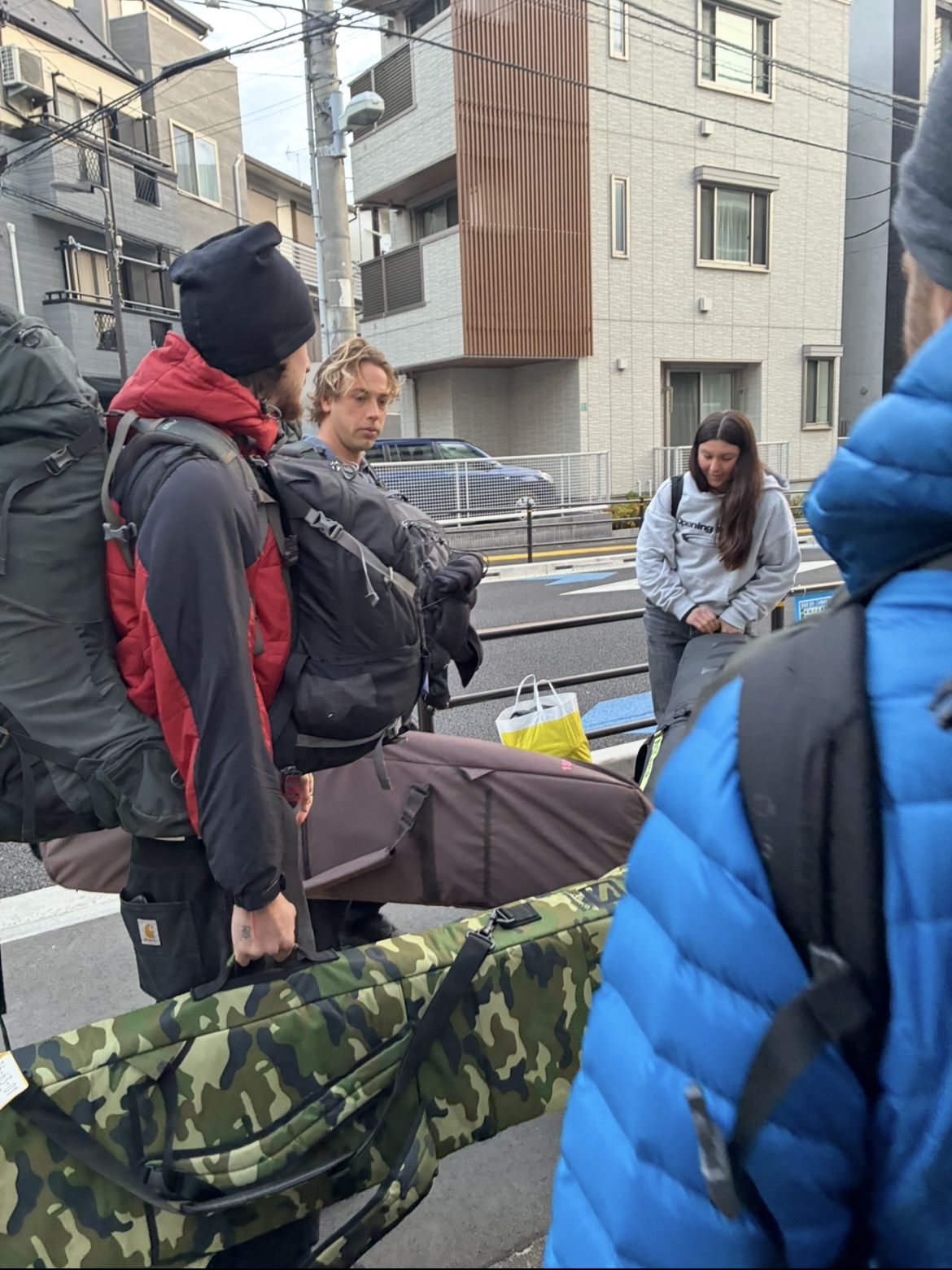
We went to Japan with a large group and had assembled most of our snow gear secondhand before leaving Australia. What we could not find at a reasonable price secondhand we picked up at Workman in Japan, which offers genuinely good value on base layers, thermals and workwear that doubles perfectly as ski kit. If we had had SummitSwap before that trip, pulling the setup together would have been significantly easier.
Useful links
Embassy of Japan in Australia working holiday visa page: https://www.au.emb-japan.go.jp/itpr_en/visa_workingholiday_en.html
Consulate-General of Japan in Sydney: https://www.sydney.au.emb-japan.go.jp/itpr_en/visa_working_holiday.html
IDP via Service NSW: https://www.service.nsw.gov.au/transaction/apply-for-an-international-driving-permit-idp